Yoga’s benefits for breast cancer survivors
This was a randomised control study published in 2014 by researchers based at Ohio State University based on research conducted over a three-month period.
The authors noted that cancer survivors in general had double the chance of poorer health than people who have not had cancer. They consider that lack of physical activity during treatment reduces fitness and cancer treatment and the disease’s affects increases this effect. This in turn leads to every day activities become more tiring and becomes a downward spiral. Research suggests that the lower the level of physical activity, the higher the risk of early death.
The less active people become, the more inflammation increases within the body which in itself is a marker for increased disability and death. The fitter you are, the lower your inflammation tends to be.
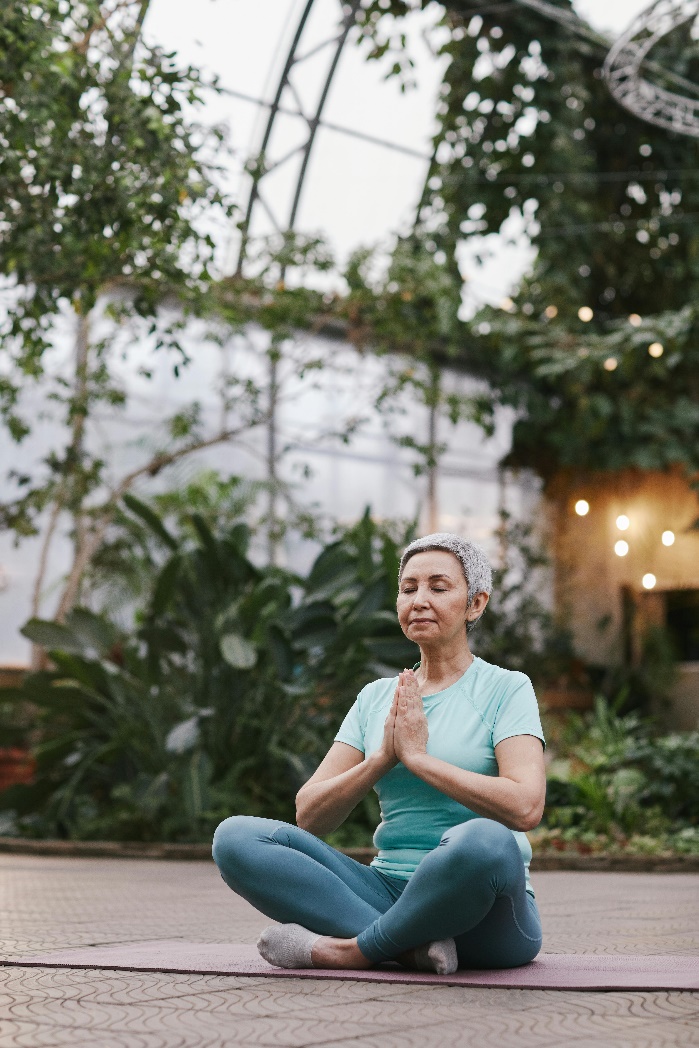
Yoga as an exercise that can be graded and adapted for movement limitations, is helpful for people who have been sedentary. Previous studies had also pointed to improvements in mood, energy and sleep.
The study included 200 women. Half undertook the study at the start, while the other half were used as a waitlist control. This means they would also get to benefit from the yoga programme but could be used as a control group in the meantime.
Participants were aged from 27 to 76 and had completed their treatment within the past three years (excluding use of e.g. tamoxifen). The researchers excluded women who were already practising yoga or who had regularly practised in in the past as well as those who were engaging in vigorous exercise.
The programme included two 90-minute sessions per week over the three months, giving 24 sessions in total. The programme also encouraged home practice and followed up any absences.
The study’s results showed that immediately after the treatment showed that while fatigue was not lower, vitality was higher, compared with the control group. However, three months post the intervention, fatigue was lower in the yoga group and vitality was higher. Inflammation markers in the body (interleukin-6, interleukin-1β and tumour necrosis factor-α) were all lower in the yoga group than the control group. interleukin-6 was reduced by 11%, interleukin-1β was reduced by 15%, and tumor necrosis factor- α was reduced by 10%.
The lead author of the study, Janice K Kiecolt-Glaser, said at the time that the study “showed that modest yoga practice over several months could have substantial benefits for breast cancer survivors.”
The takeaway – yoga for breast cancer survivors is:
- Accessible
- can be adapted to an individual’s capability
- made harder or easier
- enables breast cancer survivors to become more active
- lowers the inflammation resulting partially from the vicious circle of inactivity due to tiredness which then reduces activity still further
- lowered inflammation resulting in better long-term health outcomes
Note that other studies have suggested that yoga in itself is more beneficial that other exercise which just focus on movement. This, explained the lead author is probably because yoga combines a number of different elements: meditation, breathing, stretching and strengthening.
Yoga’s Impact on Inflammation, Mood, and Fatigue in Breast Cancer Survivors: A Randomized Controlled Trial
Authors: Janice K. Kiecolt-Glaser, Jeanette M. Bennett, Rebecca Andridge, Juan Peng, Charles L. Shapiro, William B. Malarkey, Charles F. Emery, Rachel Layman, Ewa E. Mrozek, and Ronald Glaser. Published in the Journal of Clinical Oncology, Volume 32, number 10.
Link to the research here: https://ascopubs.org/doi/10.1200/JCO.2013.51.8860